Creating Buy-In and Support for School Mental Health Screening
Creating Buy-In and Support for School Mental Health Screening
Jordan Hamilton
Implementing universal mental health screening in schools requires strong buy-in from stakeholders. To build support, schools must highlight the benefits, align efforts with existing initiatives, and address potential barriers. To gain support from community members, staff, parents, and students, tailor your messaging to each group. Community stakeholders may value the long-term benefits of improved mental health on workforce readiness, while staff may appreciate more efficient means of identifying students with needs and better student engagement. Parents and students will likely support efforts that lead to early identification of social/emotional concerns, and stronger support systems.
Invo Healthcare and MIYO Health Partner to Revolutionize School-Based Mental Health and Behavioral Services with Innovative Technology Platform.
Invo Healthcare and MIYO Health Partner to Revolutionize School-Based Mental Health and Behavioral Services with Innovative Technology Platform.
Sarah McLaurin
Tampa, FL — 02.19.2025 — Invo Healthcare, a leader in providing innovative, multidisciplinary school- based services, and MIYO Health, a pioneer in mental health technology solutions, are proud to announce a strategic partnership that brings together expertise, innovation, and commitment to student success. The partnership leverages MIYO's technology platform as a foundation for Invo's Insight?, a groundbreaking data and outcomes tracking solution designed exclusively for schools to provide real time visibility, analytics and planning resources for students receiving mental health and behavior services.
Essential Considerations for Successful Comprehensive Screening
Essential Considerations for Successful Comprehensive Screening
Jordan Hamilton
Why Establish Comprehensive Screening?
Schools serve as the prevention arm of the larger mental health system, uniquely positioned to address emerging concerns before they escalate into crises. By implementing comprehensive mental health screening processes, schools can identify students’ needs early, foster a prevention-oriented approach, and improve collaborative case management to ensure students receive timely and effective support.
The Case for Comprehensive Screening
Schools as a Critical Prevention Hub
Traditionally, mental health services have often been reactive, stepping in only after a student receives a diagnosis or faces a crisis. Schools, however, are in a prime position to disrupt this cycle by focusing on prevention and early intervention. Comprehensive mental health screening allows schools to:
Identify students with emerging mental health concerns before they escalate.
Engage in proactive, data-driven support services.
Reduce the overall impact of crises on the school community.
(Crocker, J., 2025)
In one global review of school-based mental health promotion, the study found that developing a set of indicators for specific mental health topics would be helpful in driving accountability via monitoring and evaluation of student mental health needs (Margaretha, et al., 2023). Comprehensive screening provides schools with the data arguably needed to promote school mental health concerns or challenges.
Enhancing Collaborative Case Management
Screening data can serve as a foundation for improved collaborative case management. With proper consent procedures in place (either passive or active), schools can share data with relevant stakeholders, including families and community-based mental health providers. This enables faster access to care and ensures a cohesive approach to addressing students’ needs across settings.
Fundamental Factors of Screening
In this blog series we will be reviewing the fundamental factors associated with successful comprehensive screening. Implementing universal mental health screening is a multifaceted
process that requires careful planning and execution. Key steps that we will be reviewing in more detail include:
Building a Strong Support Team: Forming a multidisciplinary team to guide and oversee the screening process.
Securing Buy-in: Engaging school staff, families, and community stakeholders to create a shared vision for mental health.
Providing Training: Offering professional development to ensure school mental health staff are prepared for all aspects of screening.
Selecting the Population and Measure: Defining who will be screened and choosing an evidence-based screening tool.
Consent Procedures: Developing clear and ethical consent protocols for students and families.
Planning Administration: Establishing logistical processes for smooth screening implementation.
Data Management: Ensuring secure data collection, analysis, and storage.
Coordinated Follow-up: Creating systems to address identified students’ needs effectively.
(Crocker, J., 2025)
Screening is not a standalone effort but rather part of a comprehensive school mental health (SMH) system. The burden of mental health disorders crosses multiple domains with nearly one in five children aged 3-17 experiencing behavioral or mental health issues (Whitney, & Peterson, 2019). Join us as this series explores these 8 key components in establishing comprehensive screening for your district and more!
Margaretha, M., Azzopardi, P. S., Fisher, J., & Sawyer, S. M. (2023). School-based mental health promotion: A global policy review. Frontiers in psychiatry, 14, 1126767. https://doi.org/10.3389/fpsyt.2023.1126767
Whitney, D. G., & Peterson, M. D. (2019). US National and State-Level Prevalence of Mental Health Disorders and Disparities of Mental Health Care Use in Children. JAMA pediatrics, 173(4), 389-391. https://doi.org/10.1001/jamapediatrics.2018.5399
Proactive Mental Health Intervention: The Role of Screeners
Proactive Mental Health Intervention: The Role of Screeners
Sarah McLaurin
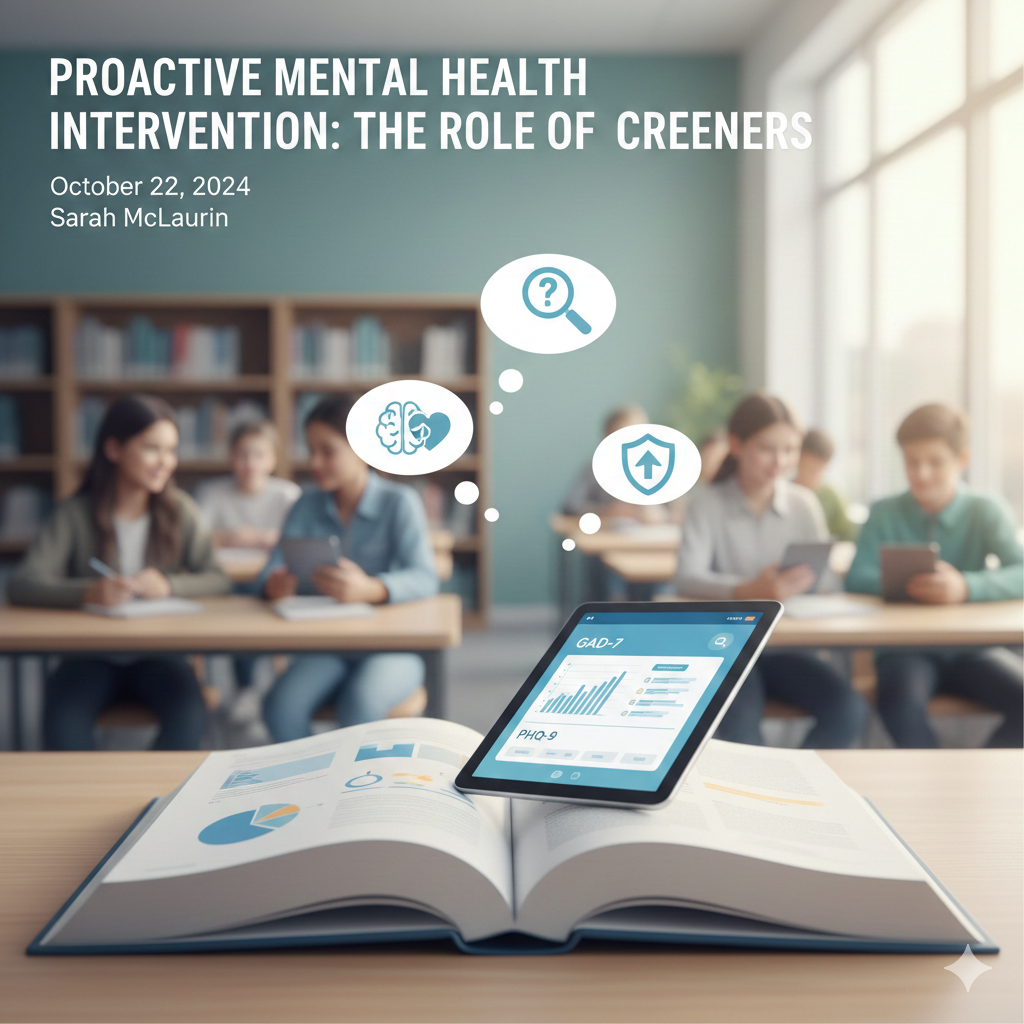
In an age where mental health is increasingly recognized as crucial to overall well-being, proactive mental health interventions, particularly through the use of screeners like GAD-7 and PHQ-9, are essential. These tools can identify issues early, especially in educational settings, and guide effective treatment plans.
Innovative Student Mental Well-Being Initiatives at Lena-Winslow
Innovative Student Mental Well-Being Initiatives at Lena-Winslow
Sarah McLaurin
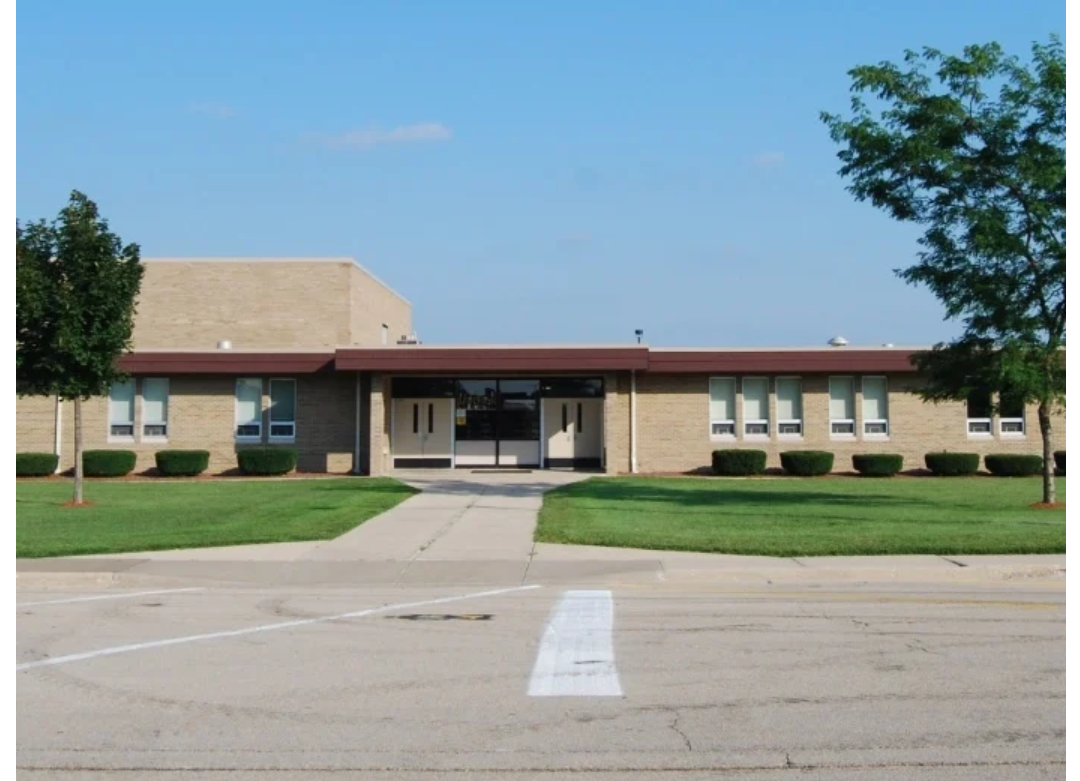
Lena-Winslow School District is at the forefront of introducing innovative strategies to enhance student mental well-being through joint initiatives and wellness screenings.
Seeing the Unseen: How Universal Screening Can Help Prevent Student Suicide
Seeing the Unseen: How Universal Screening Can Help Prevent Student Suicide
MIYO Health
Suicide is the second leading cause of death among teenagers aged 1529, and early identification is critical for prevention. While most schools may currently screen students with known behavioral health concerns, research suggests universal screeningwhere all students are screened regardless of presenting issuesis a more effective approach.
Heather Peterson is from a small town in Northeastern Iowa famous for its diversity called Postville. You may have heard of it; the town was featured in a book published in 2000, Postville: A Clash of Cultures in Heartland America about the Hasidic Lubavitcher Jews who settled there. Heather lived in Postville until moving to Cedar Falls to attend the University of Northern Iowa as a social work major. There she took a course, Psychology and Law, that sparked her interest in how psychology feeds into the legal system and child trauma. This course changed her career trajectory. Following her graduation from UNI, she went out to get her Masters Degree in Forensic Psychology from the University of Denver.
We often get the question of what remote special education services really look like in delivery and execution. It’s a fair question. So let’s take a look at the process of delivering teletherapy services, through the eyes of our Directors of School Partnerships and Provider Management (DSPPMs). Our DSPPMs are the heart and soul of the MIYO Health clinical team, and are responsible for ensuring open communication and endless support for both our school partners and our special education providers. The following three things kick into gear once a contract has been signed to enlist in MIYO Health’ services.
Marissa Rothermel grew up in upstate New York, where she lived until the spring of 2022. Making the transition down to South Carolina, her move decision was made with “health, happiness and warm weather” at the top of her mind. Her two-year old daughter was also a factor for Marissa and her husband- “We said, we either move her now before she’s established in New York, or we’re stuck here until she finishes school. That’s pretty far out,” she laughs.
Spotlight On...School Psychologist Dr. Kacey Broadhurst
Spotlight On...School Psychologist Dr. Kacey Broadhurst
Erin Raphel
Kacey Broadhurst grew up in Massachusetts, one of six daughters to a single mom. She admits her upbringing was non-traditional and therefore was on her own at the age of 16. Kacey became a mother at a young age. She knew it was a pivotal moment in her life, and felt motivated to give her child the upbringing they deserved. It was her junior year of high school, and a guidance counselor told her the goal was simply to graduate. Obviously, she wouldn’t be going to college…but Kacey had other ideas. It was just the spark she needed.
Kerry Coyne grew up on the South Side of Chicago. She always knew she wanted to work with kids in some capacity. Being the oldest child helping out with younger siblings, she imagined herself working in a daycare. Fast forward to high school. A career counselor, knowing Kerry was interested in the medical field but hated the sight of blood, recommended occupational therapy.
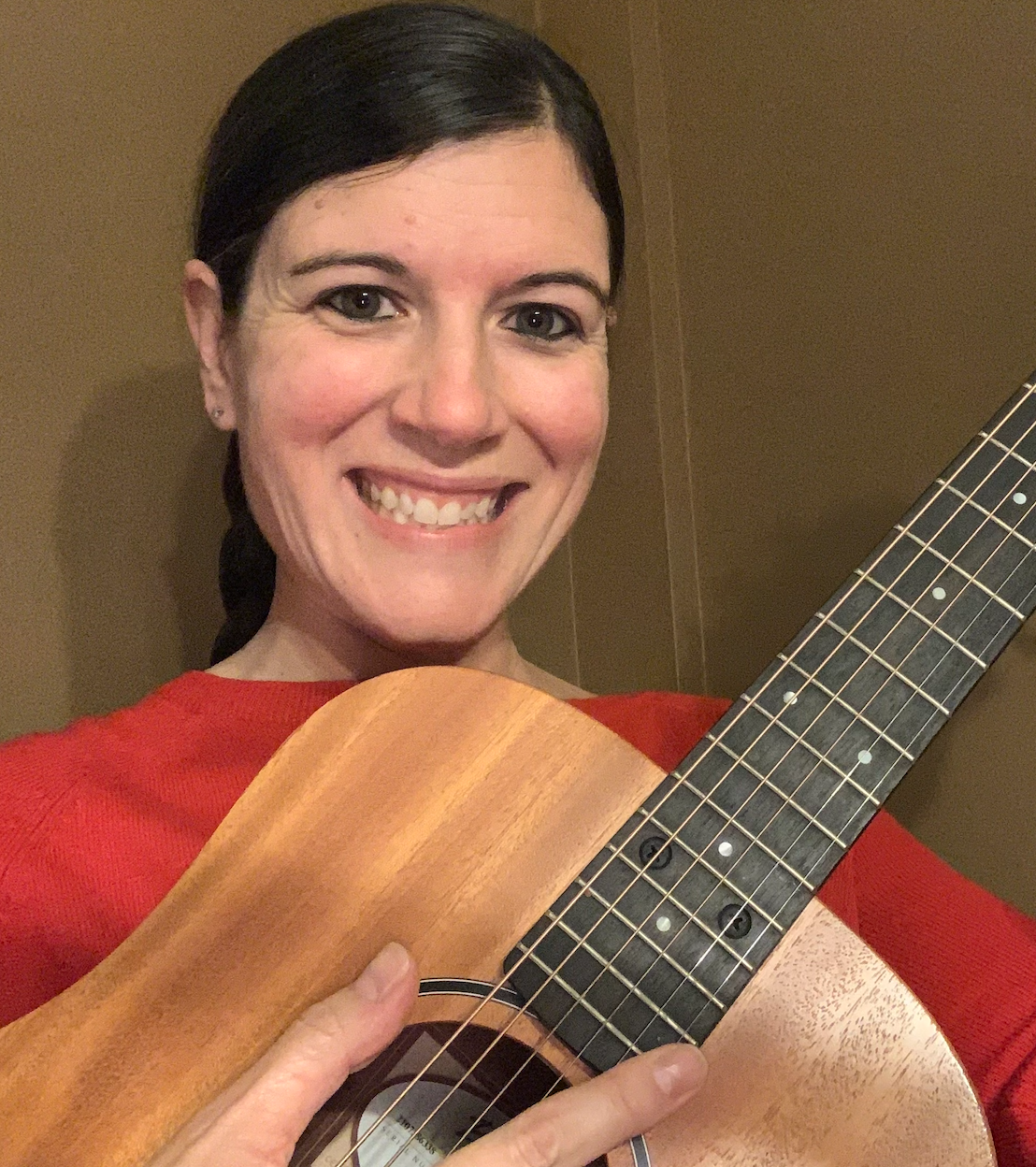
Music therapist Elizabeth Jepson is from the Chicagoland area. She grew up in Bartlett, which is where her parents still reside in her childhood home. She left Illinois to attend the University of Iowa, then returned 6 years later. Now living in Elgin, Elizabeth’s home is a full and chaotic one with 4 kids. She has been working as a music therapist for the past 15 years, both in hospice care and with kids. Elizabeth says she knew in high school that she wanted to be a music therapist after her love of choir prompted her to look into careers involving singing and music.
“Once you see the power of music, you can’t unsee that. It’s so powerful, what you can do with music. We all see it every day and don’t even think about it - even the way we teach our kids is often through sing-song lessons. If you look at that on a deeper level, the things you can accomplish through music still blows me away.”
Elizabeth explains music therapy is using music to work on and accomplish non-musical goals. Music, she says, holds emotion and memories and affects us physiologically, such as speed up or slow down our heart rate. It can tap into all parts of the brain, so if one area isn’t working as it should music can reach those other places. So, Elizabeth says, people who are nonverbal can sometimes sing. That’s the power of music.
“That’s what drew me in and what keeps me going,” she admits.
Becoming a music therapist currently requires completion of a 5-year certification program with a 6 month internship. A music therapist must be proficient in voice, piano and guitar. Elizabeth adds percussion to that list, but her voice is her main instrument. She believes the best balance lies in variety, both in delivery and settings for her therapy.
“I can’t imagine doing anything else. The beauty of music is that it can look so different - sometimes I’m working one-on-one, sometimes I’m performing, sometimes it’s a group setting. It’s so dynamic,” she says.
How does Elizabeth feel about teletherapy as a music therapy option? She admits being in person has its advantages, with human contact being an important factor. But Elizabeth acknowledges that the number one advantage of teletherapy is access. Being able to provide services where services might not be available is what fuels her in this journey. And her favorite part of her job is that human connection, which can transcend the screen.
“I love having such a unique tool at my disposal to connect with people. It’s not a one-size-fits-all situation. There are so many ways I can connect through music. Having that in my tool kit feels empowering.”